Wednesday, January 28, 2026

1959: The Packers hired Lombardi

We remember today that the Green Bay Packers hired Vince Lombardi as GM and coach:
"On January 28, 1959, the Green Bay Packers of the National Football League (NFL) sign Vince Lombardi to a five-year contract as the team's coach and general manager."
Lombardi inherited a 1-10-1 team but he turned the organization around quickly.   

Green Bay won 3 NFL titles and the first 2 Super Bowls.   Without question, the Packers were the most successful team of the 1960's.  

As a result, the Super Bowl Trophy is named after Coach Lombardi.


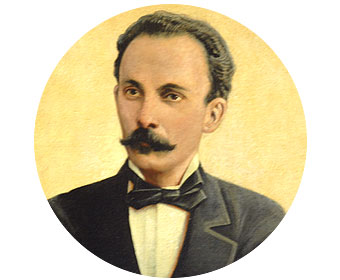
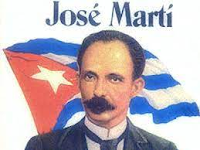
We remember the life and times of Jose Marti (1853...1895)


Guest: Fernando Hernandez, Cuban American author....We remember the life and times of Jose Marti (1853-1895)...and other stories....


The life and times of Jose Marti with Jorge Ponce, Professor Lopez and others


 P.S.  Check out my blog for posts, podcasts and videos. If you like our posts, please look for ”Donate” on the right column of the blog page.

Listen to "The life and times of Jose Marti with Professor Alfred Lopez" on Spreaker.

A look at the life of Jose Marti with Fernando Hernandez, author


Guest:  Fernando Hernandez, author of "
The Cubans:  Our footprints across America."   

His book traces the contributions that Cuban immigrants have made in the United States from as far back as the 1800s until the present time.

We will remember today the life and times of Jose Marti, who died on this day in 1895.  How significant is he to those of us Cuban Americans who grew up in the US?

Click to listen:


   Listen to "A look at the life of Jose Marti with Fernando Hernandez, author" on Spreaker.

It could have turned out different in Vietnam


Back in 1973, President Nixon announced a ceasefire in Vietnam.  It came about after the famous Christmas bombing of 1972, when President Nixon reminded North Vietnam that he had a lot of B-52s and was willing to use them.  In simple terms, the bombing was so intense that the North came back begging Secretary Kissinger for the paper to sign!
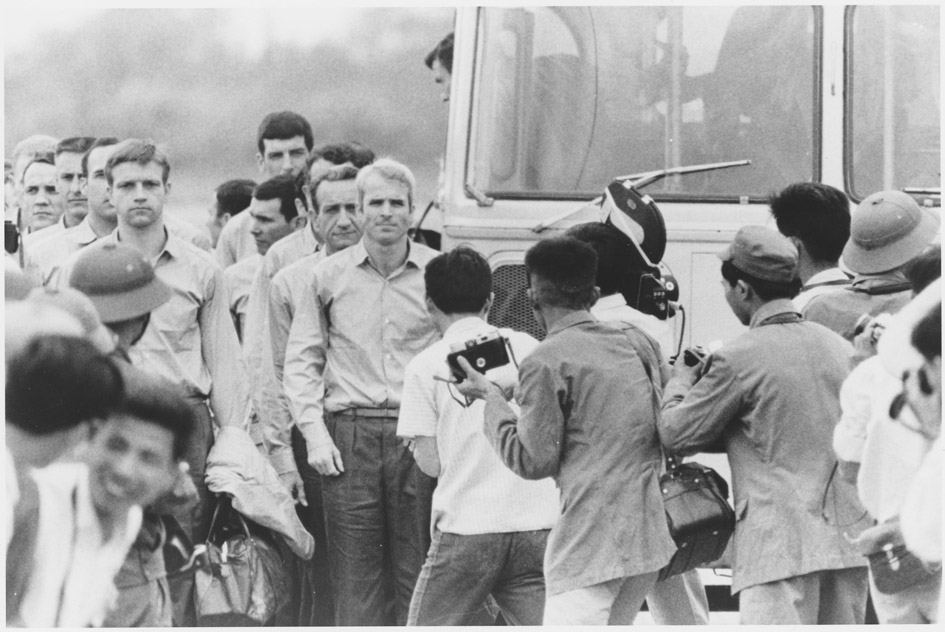
Two months later, the POWs came home, including John McCain.   
Twenty-seven months later, the North walked into Saigon, and we’ve known it as Ho Chi Minh City ever since.
Did it have to turn out that way?    
President Nixon did not think so.  He wrote about it in No More Vietnams, a book that gets better with age.  The point is that we choose to win wars or lose them, the latter of which we did in Vietnam.  To win would not have required a single soldier – just a few B-52s to remind the North that we meant to enforce the ceasefire.  We should remember that North Vietnam was devastated in 1973.
The tragedy of Vietnam is that the USSR could not believe that we let South Vietnam collapse in 1975, as Stephen J. Morris wrote on the 30th anniversary of the disintegration of Saigon:
If the United States had provided that level of support in 1975, when South Vietnam collapsed in the face of another North Vietnamese offensive, the outcome might have been at least the same as in 1972. 
But intense lobbying of Congress by the antiwar movement, especially in the context of the Watergate scandal, helped to drive cutbacks of American aid in 1974. 
Combined with the impact of the world oil crisis and inflation of 1973-74, the results were devastating for the south. 
As the triumphant North Vietnamese commander, Gen. Van Tien Dung, wrote later, President Nguyen Van Thieu of South Vietnam was forced to fight “a poor man’s war.”
Even Hanoi’s main patron, the Soviet Union, was convinced that a North Vietnamese military victory was highly unlikely. 
Evidence from Soviet Communist Party archives suggests that, until 1974, Soviet military intelligence analysts and diplomats never believed that the North Vietnamese would be victorious on the battlefield. Only political and diplomatic efforts could succeed. 
Moscow thought that the South Vietnamese government was strong enough to defend itself with a continuation of American logistical support. 
The former Soviet chargĂ© d’affaires in Hanoi during the 1970’s told me in Moscow in late 1993 that if one looked at the balance of forces, one could not predict that the South would be defeated. 
Until 1975, Moscow was not only impressed by American military power and political will, it also clearly had no desire to go to war with the United States over Vietnam. 
But after 1975, Soviet fear of the United States dissipated.
No kidding that fear of the U.S. dissipated.  The post-Vietnam years contributed to the perception that the U.S. was weak and unwilling to defend its interests.  From Nicaragua to Iran to the Soviets in Afghanistan and Cuban troops in Africa, it was a time of U.S. weakness.  Thankfully, it ended with the Reagan presidency.
There were many mistakes in Vietnam, from using the Gulf of Tonkin resolution to send 500,000 soldiers to war to not fighting to win.  I believe that the biggest mistake was not preserving our gains, or a South Vietnam that would have looked a lot like South Korea today.
Again, it could have turned out very different, especially for the many who served in Vietnam.  They won the battles, and the politicians lost the peace.
P.S. You can listen to my show (Canto Talk).


Tuesday, January 27, 2026

Holman to Minnesota, Climate change and winter storm. Washington Post ...


Holman to Minnesota,  Climate change and winter storm.  Washington Post layoffs.  National Geographic 1888.

Heard anything lately about climate change?


The bad news is that we are freezing in Texas. The good news is that we are blaming it on winter and not climate change.

Click to read:

https://www.americanthinker.com/blog/2026/01/heard_anything_lately_about_climate_change.html

-------------------------------------


It'sfreezing down in North Texas. It's so cold that we've been locked inside for a few days. The only good news (knock on wood) is that our electricity is running. The second bit of good news is that I’m reminded that my wife can make some nice hot soup.

So stay warm wherever you are and remember that we will soon have 100-degree days around here.

Here is a funny one: Have you heard anyone blame any of this on climate change? I haven't, although I heard that former VP Al Gore was in Davos. I don't know why he was there, but I guess his predictions did not come true either.

What happened to the climate? The guys at the I&I editorial board have some thoughts. Let's hear from them:

Over the weekend, USA Today reported that northeast states were experiencing an unusual winter problem -- a shortage of salt.

It seems that there have been so many snowstorms this winter that even states like Michigan and Vermont -- which are quite accustomed to them -- are running short of the snow-melting chemical.

“An official from Monroe County, [Michigan] located between Detroit and Ohio, told the news station that local crews used more salt in December than in the past four Decembers combined,” says USA Today.   

But what’s curiously missing from this and other accounts of the winter storm is the obligatory mention of “climate change” as the cause. It seems that bad winter weather is just weather. Whereas bad summer weather is always -- always -- and prominently blamed on our burning fossil fuels.


Burning fossil fuels? Aren't we doing that anymore? Maybe not, because suddenly winter storms in January are just that, i.e. winter storms in January!

Where did climate change go? Maybe it was all a big hoax after all. I don't mean that the climate doesn't change. In fact, it's been changing since Adam and Eve were expelled from the Garden of Eden.

The hoax was the hysterical reaction and stories of bears dying. That's when climate change, as the editorial points out, went from science to a pagan religion.

That's when people with reasonable doubts became heretics and the heroes vandalized works of art at museums.

Anyway, the bad news is that we are freezing in Texas. The good news is that we are blaming it on winter and not climate change. That's progress, as someone said.

P.S. Check out my blog for posts, podcasts and videos.

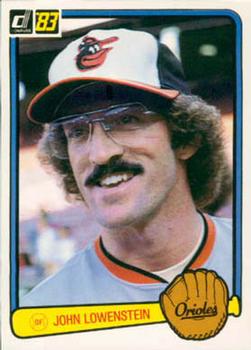
Happy # 79 John Lowenstein

We say happy birthday to John Lowenstein who was born in Montana on this day in 1947.

John was one of the most popular players in the Orioles teams that played in the 1979 and 1983 World Series.   He was not a superstar, like Eddie Murray, Jim Palmer or Cal Ripken, but he was a huge factor in the Orioles' winning ways.

John came to Baltimore just before the 1979 season and platooned in left field with Gary Roenicke.   His numbers were great, specially in 1982 when he hit .320 with 24 HR and 66 RBI in 122 games.   In 1983, or the year that Baltimore won the World Series, John hit .291 with 15 HR.

In the post season, John hit .308 in 10 games.   He also hit the 3-run homer to beat the Angels in extra innings of game 1 of the 1979 ALCS.

He was a real fan favorite.   I hope that he's doing well.   Thanks for the memories!

 P.S.  Check out my blog for posts, podcasts and videos. If you like our posts, please look for ”Donate” on the right column of the blog page.


1967: The tragedy of Apollo I

We remember another anniversary of the Apollo I tragedy on this day in 1967.  

The men killed that day were Virgil "Gus" Grissom, Edward H White and Roger B Chafee.   They died in capsule fire a few weeks before their launch date.

The tragedy was a great loss for NASA.

At the same time, the "bench" was so deep that other men stepped up and Apollo 11 landed on the moon in July 1969.
 
P.S.  Check out my blog for posts, podcasts and videos. If you like our posts, please look for ”Donate” on the right column of the blog page.


1888: The National Geographic Society was founded

On this day in 1888, a group of geographers, explorers, teachers, lawyers, cartographers, military officers and financiers met in Washington DC.    They eventually founded The National Geographic Society.    

Nine months later, the Society started publishing the magazine that we grew up reading.

P.S.  Check out my blog for posts, podcasts and videos. If you like our posts, please look for ”Donate” on the right column of the blog page.