Thursday, January 02, 2025

Obama and Cuba: Change but no hope

Obama and Cuba: Change but no hope : Ten years ago, President Obama decided to try something new with Cuba. Today, 10 years later, the “something new” has brought nothing to Cuba. We have an embassy, and President and Mrs. Obama watched a baseball game in Havana. They did….


We discuss politics, sports and a few extras!

Obama and Cuba: Change but no hope

leave a comment »

Ten years ago, President Obama decided to try something new with Cuba. Today, 10 years later, the “something new” has brought nothing to Cuba. We have an embassy, and President and Mrs. Obama watched a baseball game in Havana. They did the wave with Raul Castro and lots of people thought that things would change. Nothing did.

Down in Cuba, there is little hope, as we saw in The NY Times:

It wasn’t long ago that Havana’s Plaza of the Revolution was packed with American tourists knocking into each other with selfie sticks while taking photos of the iconic image of the revolutionary Che Guevara and trying to catch a ride in a candy-apple red 1952 Chevrolet Bel-Air.

Today, those polished 1950s-era American convertibles that came to symbolize quintessential Cuba sit empty, the tourists they once carried largely gone.

The drivers spend their lives like most Cubans do: coping with prolonged power outages, standing in line at poorly stocked supermarkets and watching their friends, family and neighbors — sick of all the hardships — pack up and leave.

Ten years ago, President Barack Obama stunned the world by restoring diplomatic relations with Cuba, ending more than 50 years of Cold War estrangement between the United States and a country with which it had once been on the brink of nuclear war.

For two and a half years, Cuba brimmed with enthusiasm amid a remarkable wave of investment and tourism, fueled by deals signed by major American companies such as Google, AT&T and Major League Baseball.

But a financial implosion caused by a cascade of factors — the tightening of U.S. policy by the Trump administration, Cuba’s mismanagement of its economy, the crushing effect of the Covid-19 pandemic — has kept visitors away and launched an immigration exodus of epic proportions.

Yes, the tourists came and settled their curiosity touching those 1950s car models driving around Havana. The excitement didn’t last and now everybody is wondering if the Cuba policy was worth it all.

Add to this that the Obama administration did not demand a single concession from the Castro regime. We gave Cuba an embassy, a presidential visit, lots of attention but nothing came back. Did we demand the release of political prisoners? Did we demand some economic reforms to make the country more appealing to investors? No we didn’t.

Raul got his embassy and Obama got to tell the liberal college professors that he changed the policy. In reality, nothing changed, and that was a huge victory for the communist regime.

P.S. Check out my blog for posts, podcasts and videos.

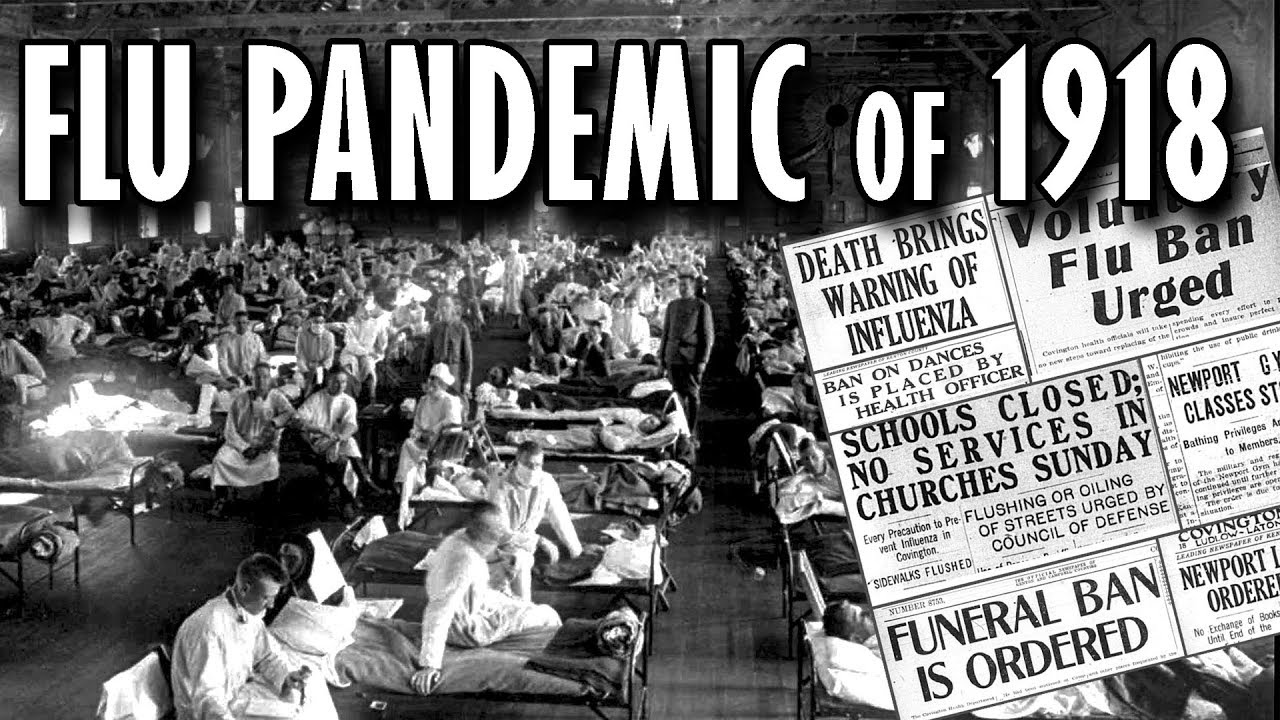
2014 podcast: World War I & Spanish flu with Leslie Eastman & Barry Jacobsen


 P.S.  Check out my blog for posts, podcasts and videos. If you like our posts, please look for ”Donate” on the right column of the blog page.

The story of World War I with Barry Jacobsen, part 3


CLICK TO LISTEN:

The story of World War I with Barry Jacobsen, part 3 08/22 by Silvio Canto Jr | Politics Podcasts:

Guest: Barry Jacobsen, blogger and military historian. 

P.S.  You can listen to my show.  If you like our posts, please look for ”Donate” on the right column of the blog page.


The story of World War I with Barry Jacobsen, part 4


CLICK TO LISTEN:

The story of World War I with Barry Jacobsen, part 4 08/28 by Silvio Canto Jr | Politics Podcasts:

Guest: Barry Jacobsen, military historian and blogger. This is our 4th show about World War I. 

P.S.  You can listen to my show.  If you like our posts, please look for ”Donate” on the right column of the blog page.


The story of World War I, part 2, with Barry Jacobsen

Image result for world war I images


P.S.  You can listen to my show.  If you like our posts, please look for ”Donate” on the right column of the blog page.

A chat with Matt Baldoni about his career and the Australian Bee Gees


 P.S.  You can listen to my show.  If you like our posts, please look for ”Donate” on the right column of the blog page.


Cubanos in Wisconsin, a 2013 review by Israel Ortega


(Review by Israel Ortega)


Quickly juxtaposing Wisconsin and Cuba is difficult.   

The first embodies the rugged Midwestern spirit of long working hours, Green Bay Packers and bone-chilling winters while the other conjures up images of a tropical paradise and that bearded General that has stayed in office way too long. 

In Cubanos in Wisconsin, blogger, author and radio host, Silvio Canto Jr. pens an autobiographical journey of how a countryside Cuban managed to make it to the frozen tundra that is Wisconsin. 

In the process, Canto provides us with an ominous account of just how quickly a relatively prosperous and stable country can be turned upside down because of communism.

As Canto explained to me, “the political and economic repressions that took place once Castro took over happened very quickly….It reminds me to never take your freedom for granted.”  

Canto, like many Cubans his age  seldom need reminding of the perils of socialism and government planning with many having lived through the horrors of communism first-hand.

But what about younger Americans and younger Cuban Americans that have no recollection of what life was like in Cuba under the Castro regime?  What can they get from this account?  

A question I posed Canto when interviewing him about his book.  Canto acknowledged the generational gap of the Cuban American experience, but correctly remarked in the universality of the immigrant experience that is sure to resonate with younger readers.

Indeed, as a recent Census Bureau Report suggests, nearly a third of Hispanics in the United States have at least one parent or grandparent that is an immigrant suggesting that the ties to Latin America are indeed still very much personal.  What’s more, there’s a natural curiosity about Latin America for many of the Hispanics born in the United States as evidenced by Canto’s own sons that learned a great deal about their father’s native Cuba and his adventures along the way, including the story of how a young Silvio almost started World War III at the height of the Cold War by setting off an alarm in a Soviet truck in a military compound.

And although the Cuban Revolution and the Cold War serve as the prominent backdrop to Silvio’s story, much of it could happen in 2013.  Leaving your friends, family and loved ones for a new country with a new culture and new language is experienced by many young immigrants.  And even if one didn’t immigrate to the country, today’s multi-cultural families are as American as apple pie.

For Silvio, the young immigrant should remember that this country, the United States of America, is a special place. Special because it is one grounded in liberty and the promise of endless opportunity.  Unlike his native Cuba that promised equality of outcome once Castro took over, the United States provides that individual can accomplish whatever one sets their heart and mind to fulfilling.

This is a good reminder particularly in a time when the general consensus among the political elite that expanding the social welfare safety net is the only way to confront income inequality.

Beyond the political subtext, Cubanos in Wisconsin is also a good reminder that the Hispanic population is, and has always been geographically diverse.  Almost intuitively, Americans are wired to think that Hispanics live only in California and Texas, but as Canto’s book makes clear, Hispanics were living in Wisconsin long before the Latino craze started sweeping our country a few decades back.

Canto’s Cubanos in Wisconsin is an enjoyable read with an important message about how big government can ruin a country and decimate it completely.    Despite our current travails, we are indeed a blessed lot with endless possibilities. Canto and other immigrants that come to our shores are a good reminder to fight to preserve and protect those liberties that so many have come here looking for with that promise of a better tomorrow.

P.S.  You can order the book here:


Wednesday, January 01, 2025

Happy New Year, terror in New Orleans and a word about Pres. Carter


Wednesday's video: Happy New Year, terror in New Orleans and a word about Pres. Carter

Carter was better after he was president

Carter was better after he was president: It was Inauguration Day 1981, or almost 43 years ago to the day.  I was driving some colleagues in the north of Mexico to see some of our manufacturing clients.  It wasn't lost that a new president would soon assume office and….
Click to read:


 It was Inauguration Day 1981, or almost 43 years ago to the day. 

I was driving some colleagues in the north of Mexico to see some of our manufacturing clients. 

It wasn't lost that a new president would soon assume office and were listening to WOAI, a powerful AM signal out of San Antonio.   

We literally applauded when the Supreme Court's Chief Justice said, "Congratulations, Mr. President.  

So this is how learned that the malaise was over.

Yes, that's the President Carter that I remember.  Maybe a nice man but a total failure as president.  
 
It took a while but President Carter did improve his image and gave us reasons to say good things about him.  He was better after 1981 or after he left Washington D.C.
 
I agree with Todd S. Purdum:
 
His four years in office were fraught, bedeviled from the start by double-digit inflation and a post-Vietnam-and-Watergate bad mood. His fractious staff was dominated by the inexperienced “Georgia Mafia” from his home state. His micromanagement of the White House tennis court drew widespread derision, and his toothy, smiling campaign promise that he would “never lie” to the country somehow curdled into disappointment and defeat after one rocky term.
 
Yet James Earl Carter Jr., who died today at his home in Plains, Georgia, surely has a fair claim to being the most effective former president his country ever had. In part that’s because his post-presidency was the lengthiest on record—more than four decades—and his life span of 100 richly crowded years was the longest of any president, period. But it’s also because the strain of basic decency and integrity that helped get Carter elected in the first place, in 1976, never deserted him, even as his country devolved into ever greater incivility and division.
 
O.K. That's true. 
 
He was a nice man who kept fumbling the ball but used the prestige of the post presidency to do some good things, from helping to eradicate dreaded tropical diseases no one else would touch, to his incredible work building homes for the poor with Habitat for Humanity.
 
He was a former president for 43 years.  He could have gone away and played golf but he decided to do something more useful.  
 
Most of the readers don't remember his presidency and that's how it happens. 
 
Unlike Biden, who is an angry man and used his death to go partisan on Trump, or Obama who is full of himself but must know that the thrill is gone, or Clinton who probably knows how inconsequential he was, Carter did something good and that's how we'll complete the rest of the story.
 
RIP President Carter.