Thursday, September 18, 2014

Leslie Eastman and Bosch Fawstin join me for a political chat


Tags: Bosch Fawstin  To share or post to your site, click on "Post Link". Please mention / link to the My View by Silvio Canto, Jr. Thanks!

Wednesday, September 17, 2014

Whom is President Obama really listening to?

Like some of you, I've wondered about President Obama's inner circle.  I am not talking about the people with titles or all of "suits" who move around with him from one place to another.   

In other words, whom does he go to for advice, for geopolitical thinking or just plain common sense?  Whom does he speak confidentially with?  Does he call, say, President Bush-41 and get some thoughts about putting together a coalition?  Has he spoken to President Bush-43 about shifting strategies, like the surge of 2007?  Has he spoken to President Clinton about revamping his administration, as we saw after 1994?

I was not happy to hear this from Charles Krauthammer on The Hugh Hewitt Show.  Needless to say, Mr. Krauthammer is someone I respect a great deal.   His comments left me speechless:
HH: All right, last question, over the weekend, or over the last few days, David Petraeus, General James Mattis and George W. Bush all found forums in which to try and push the President towards acting decisively. These are three men who have not said anything publicly about the President. Do you think that helps nudge him? Or does he resent that they are doing so?
CK: I don’t think it affects him either way. The man lives in a cocoon surrounded by sycophants. There’s not anyone of independent stature around him. There was in the first term, because he needed them to prop him up. But now that he entered a second term, he’s the master of the universe, so there’s nobody around him. He is impervious to outside advice, real advice that he takes. Why doesn’t he talk to Henry Kissinger? Why doesn’t he talk to George Schultz? And Petraeus was the one who did what we have to do, which is to turn the Sunnis around. He did that in ’08 and ’09, and Obama then said that he pretended that nothing had happened. No, I don’t think Obama can be reached. I think he’ll have to come to his own decision. And I think what brought him to his own decision to do anything at all was the switch in public opinion. It was not a switch in strategy. I guarantee you that if we hadn’t had the televised beheadings, Obama would never have announced the policy he did.
My fear is that Mr. Obama does not think that he has to come "to his own decision."  
Why do you do that when you are surrounded by lightweights who are more likely to chant "yes we can" than to say "you're wrong, Mr. President"?

P.S. You can hear CANTO TALK here & follow me on Twitter @ scantojr.


Check Out Politics Podcasts at Blog Talk Radio with Silvio Canto Jr on BlogTalkRadio

Tags: Pres Obama'sinner circle  To share or post to your site, click on "Post Link". Please mention / link to the My View by Silvio Canto, Jr. Thanks!

Tuesday, September 16, 2014

TUESDAY: We chat with Richard Baehr about Pres Obama's foreign policy

 
 TUESDAY: We chat with Richard Baehr about Pres Obama's foreign policy...Listen in now at http://t.co/rGhjPJWi8Q. #BlogTalkRadio


Tags: The Obama foreign policy  To share or post to your site, click on "Post Link". Please mention / link to the My View by Silvio Canto, Jr. Thanks!

Where is the outcry for a new war resolution?

According to news reports, President Obama plans to use the 2002 Iraq War resolution to fight ISIS.   
Maybe we can say that he was against the resolution before he was for it?

Frankly, why doesn't he use the 1990 Gulf War resolution? Then Senator Gore voted for that war!

It is absolutely insane for President Obama to rely on a 12-year old resolution to fight this war. I supported the 2003 Iraq War but that was then and this is now!

Let's hope that the Obama White House has the good sense to go to Congress and demand another resolution to fight ISIS, especially if we go into Syria.

I agree with Senator Kaine, quoted in Albert Hunt's latest op-ed:
"Kaine, an Obama ally, dismisses the president's claim that the post-Sept. 11 authorization of force against al-Qaeda also gives him the power to go after Islamic State, which didn't exist in 2001.
"The president is saying, 'Now let's go on the offense,' and he needs congressional authority to do that," Kaine said. "
It makes sense for President Obama to go to Congress:

1) He forces Congress to do their job.  They have a constitutional duty to declare war.  We don't need a war declaration but a resolution would put legislators on record. Also, we would have a debate on the strategy and the merits of such an involvement.

Again, I'd support such a resolution but the public needs a debate. We've had too much silence about these national security matters.

2) Pres Obama needs a co-pilot for this mission. We saw in ObamaCare that "one party" legislation can turn into a political nightmare.

At the end of the day, ISIS needs to formally hear from Congress. The world needs to hear from Congress too.

It should be an American mission approved by a bi-partisan majority of legislators.  

P.S. You can hear CANTO TALK here & follow me on Twitter @ scantojr.


Tags: Iraq/ISIS war resolution  to share or post to your site, click on "Post Link". Please mention / link to the My View by Silvio Canto, Jr. Thanks!

Iraq/ISIS, Scotland & a few sports thoughts about Rangers & Cowboys


Tags: Iraq/ISIS, Scotland, DFW sports  To share or post to your site, click on "Post Link". Please mention / link to the My View by Silvio Canto, Jr. Thanks!

Monday, September 15, 2014

A Little 'Scottish Fever' in Europe?

Related image

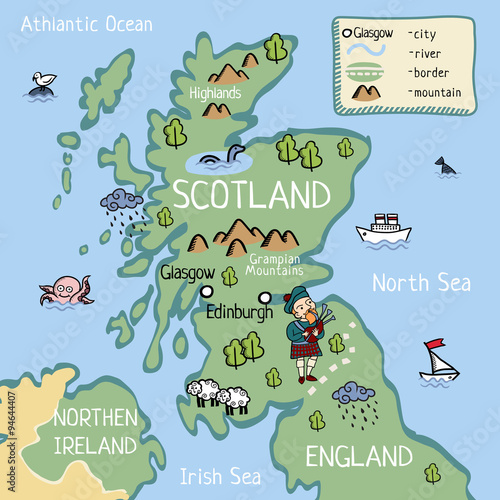
We are all following the Scottish independence movement.  It's interesting and a pleasant distraction to some of the issues on the table. After all, no one is getting killed in Scotland and the U.S. can watch this one from the bleachers. 

There are concerns about this independence movement moving beyond Scotland into places like Spain, where there are already secessionist attitudes in Catalonia.

The concerns are real, as we read from Danny Kemp:

"The prospect of Scottish independence is raising fears in Europe that it could inflame other separatist movements at a time when the continent's unity and even its borders are under threat, analysts say.  
While nationalists from Catalonia to Flanders will watch Scotland's referendum with hope, Brussels is nervous about the possibility of a major European Union member like Britain falling apart.  
The fear of contagion spreads as far as the EU's eastern frontier, where the Baltic countries worry that Moscow will back their ethnic Russian citizens who could then claim more autonomy.  
But while the EU might initially make life difficult for a new Scottish nation, it would most likely allow it to join the bloc eventually, experts said.  
"It is a very difficult situation for the EU if Scotland becomes independent, it really is," Pablo Calderon Martinez, Spanish and European Studies fellow at King's College London, told AFP."
My conversation with Europeans, specially Spanish from Catalonia, is that these independence movements are really about the economic mess in Europe. 

It's a way of having more local control over issues like the EU, the euro, and how taxes are spent. 

Many people in Europe feel that they've lost sovereignty to continental institutions, like the EU, or unaccountable bureaucrats.
 
Let's see what happens in Scotland.  However, I would not be surprised if more regions of Europe call for independence. Again, it's about people who want more and more control of their daily affairs and business.
 
P.S. You can hear CANTO TALK here & follow me on Twitter @ scantojr.


Tags: Scotland and Europe  To share or post to your site, click on "Post Link". Please mention / link to the My View by Silvio Canto, Jr. Thanks!
Sunday, September 14, 2014

President Obama Needs to Get Real about Fighting ISIS

How hard is the battle against ISIS going to be?  Let's remember the second battle of Fallujah in late 2004:
Located approximately forty miles west of Baghdad, Fallujah was effectively surrounded by US forces by October 14. Establishing checkpoints, they sought to ensure that no insurgents were able to escape the city. Civilians were encouraged to leave to prevent being caught in the coming battle and an estimated 70-90% of the city's 300,000 citizens departed. During this time, it was clear that an assault on the city was imminent and the insurgents prepared a variety of defenses and strong points. The attack on the city was assigned to the I Marine Expeditionary Force (MEF).    
With the city cordoned off, efforts were made to suggest that the Coalition attack would come from the south and southeast as had occurred in April. Instead, I MEF intended to assault the city from the north across its entire breadth. On November 6, Regimental Combat Team 1, consisting of the 3rd Battalion/1st Marines, 3rd Battalion/5th Marines, and the US Army's 2nd Battalion/7th Cavalry, moved into position to assault the western half of Fallujah from the north.
They were joined by Regimental Combat Team 7, made up of the 1st Battalion/8th Marines, 1st Battalion/3th Marines, and the US Army's 2nd Battalion/2nd Infantry which would attack the eastern part of the city. These units were joined by Iraqi troops as well. With Fallujah sealed, operations began on at 7:00 PM on November 7, when Task Force Wolfpack moved to take objectives on the west bank of the Euphrates River opposite Fallujah. While Iraqi commandoes captured Fallujah General Hospital, Marines secured the two bridges over the river to cut off any enemy retreat from the city.  
A similar blocking mission was undertaken by the British Black Watch Regiment south and east of Fallujah. The next evening, RCT-1 and RCT-7, backed by air and artillery strikes commenced their attack into the city. Using Army armor to disrupt the insurgent's defenses, the Marines were able to effectively attack enemy positions, including the main train station. Though engaged in fierce urban combat, Coalition troops were able to reach Highway 10, which bisected the city, by the evening of November 9. The eastern end of the road was secured the next day, opening a direct supply line to Baghdad. 
Despite heavy fighting, Coalition forces controlled approximately 70% by the end of November 10. Pressing across Highway 10, RCT-1 moved through the Resala, Nazal and Jebail neighborhoods while the RCT-7 assaulted an industrial area in the southeast. By November 13, US officials claimed that most of the city was under Coalition control. The heavy fighting continued for the next several days as Coalition forces moved house-to-house eliminating insurgent resistance. During this process thousands of weapons were found stored in houses, mosques, and tunnels which connected buildings around the city.    
The process of clearing the city was slowed by booby-traps and improvised explosive devices. As a result, in most cases, soldiers only entered buildings after tanks had rammed a hole in a wall or specialists had blasted a door open. On November 16, US officials announced that Fallujah had been cleared, but that there were still sporadic episodes of insurgent activity.
It was one of the toughest battles of the Iraq War, with over 50 U.S. casualties and many injuries.

I bring up Fallujah because there will be many of these battles before ISIS is defeated.  They are clearly a lot stronger than al-Qaeda, and spread out over large portions of territory. 

You cannot degrade ISIS with air power.  It will take air power plus a strong ground troop effort to root them out of areas.  It will take an honest president who confronts the US public with reality, as Angelo M. Codevilla wrote yesterday:
President Obama’s promise “to degrade and ultimately destroy ISIL” may or may not end up causing problems for the Islamic State.
Surely however, it further degraded our security by further engaging us in the combination of fantasy and half measures that has earned America a reputation for un-seriousness and opened hunting season on Americans everywhere.
It's time to get serious, Mr. President.  Your base won't like it, but the soldiers you are putting in harm's way deserve a little truth about what it will really take to dismantle ISIS.

P.S. You can hear CANTO TALK here & follow me on Twitter @ scantojr.


Check Out Politics Podcasts at Blog Talk Radio with Silvio Canto Jr on BlogTalkRadio


Tags: Iraq and ISIS  To share or post to your site, click on "Post Link". Please mention / link to the My View by Silvio Canto, Jr. Thanks!

Iraq, the coalition and are we at war or not with Jim Yardley


Tags: Iraq and ISIL  To share or post to your site, click on "Post Link". Please mention / link to the My View by Silvio Canto, Jr. Thanks!

Saturday, September 13, 2014

It was a lot easier to talk coalition than about the 'yes we can election rally'

We heard it all over and over during the 2008 campaign; the charge that President Bush could not bring allies to the table.

So what happened to President Obama now that he is trying to put together a coalition?
So far it's not working, according to news reports:
"The German foreign minister says his country will not take part in any such strikes inside Syria, and, there are mixed signals coming out of Great Britain. 
The British foreign secretary says the U.K. supports America's approach of forming an international coalition to defeat ISIS while also saying there is a limit to what Great Britain will do.  
"Let me be clear, Britain will not be taking part in any airstrikes in Syria, I can be very clear about that. We've already had that discussion in our parliament last year and we won't be revisiting that position,” said Phillip Hammond, the British foreign secretary."
This is on top of another story about "tepid support" from the Arab countries:
"Many Arab governments grumbled quietly in 2011 as the United States left Iraq, fearful it might fall deeper into chaos or Iranian influence. Now, the United States is back and getting a less than enthusiastic welcome, with leading allies like Egypt, Jordan and Turkey all finding ways on Thursday to avoid specific commitments to President Obama’s expanded military campaign against Sunni extremists."
Frankly, I am not surprised that another US president can't get much of a coalition.  We saw it with President Clinton in Bosnia and Rwanda, and with President Bush in Iraq.

At the same time, it is shameful for our allies to be so "tepid."  ISIS is as much as threat to them as it is to the US. One could argue that ISIS is lot closer to a European city than any US city.

Finally, this is another reality moment for President Obama and all of the "yes we can screamers" who faulted President Bush. 

Welcome to reality President Obama - and all of the Bush critics who got drunk on the "yes we can" kool-aid."

P. S. You can hear CANTO TALK here & follow me on Twitter @ scantojr


Tags: Iraq and coalition  To share or post to your site, click on "Post Link". Please mention / link to the My View by Silvio Canto, Jr. Thanks!

Friday, September 12, 2014

Not Impressed by President Obama's ISIS Message

Believe it or not, I was actually looking forward to a presidential speech that I could get excited about.  I was hoping that President Obama would prove me wrong and go to Congress for a war resolution.  

Unfortunately, we got a speech telling our enemies what we would and would not do.  It's like the baseball manager who tells the other team that he is not bunting or ta
king the extra base or pitching inside.

You can't play baseball like that.  You can't fight a war like that, either.

Sadly, Charles Krauthammer is right.  The speech was all about politics:
And beyond the strategy’s halfhearted substance is its author’s halfhearted tone. Obama’s reluctance and ambivalence are obvious.
This is a man driven to give this speech by public opinion. It shifted radically with the televised beheading of two Americans. Every poll shows that Americans overwhelmingly want something to be done — and someone to lead the doing.    
Hence Wednesday’s speech. Its origins were more political than strategic. Its purpose was to save the wreckage of a presidency at its lowest ebb. (If this were a parliamentary democracy, Obama would lose a vote of non-confidence and be out of office.) Its point was to give the appearance of firmness and purpose, i.e., leadership.   
You could sense that Obama had been dragged unwillingly into this new unproclaimed war. Which was reminiscent of Obama’s speech five years ago announcing the surge in Afghanistan.
In the very next sentence, he announced a fixed date of withdrawal. Then added, lest anyone miss his lack of enthusiasm, “The nation that I’m most interested in building is our own.” 
Meaning, not Afghanistan.  
At the time, I called it the most uncertain trumpet ever sounded by a president summoning the country to war.
I fear the campaign against the Islamic State will be a reprise.
As the father of a young man in the U.S. Army, I wish that our commander in chief had his heart in the mission or would speak more clearly.  Our young men and women in the armed forces deserve better.

P.S. You can hear CANTO TALK here & follow me on Twitter @ scantojr.


Check Out Politics Podcasts at Blog Talk Radio with Silvio Canto Jr on BlogTalkRadio


Tags: Iraq and Pres Obama  To share or post to your site, click on "Post Link". Please mention / link to the My View by Silvio Canto, Jr. Thanks!